
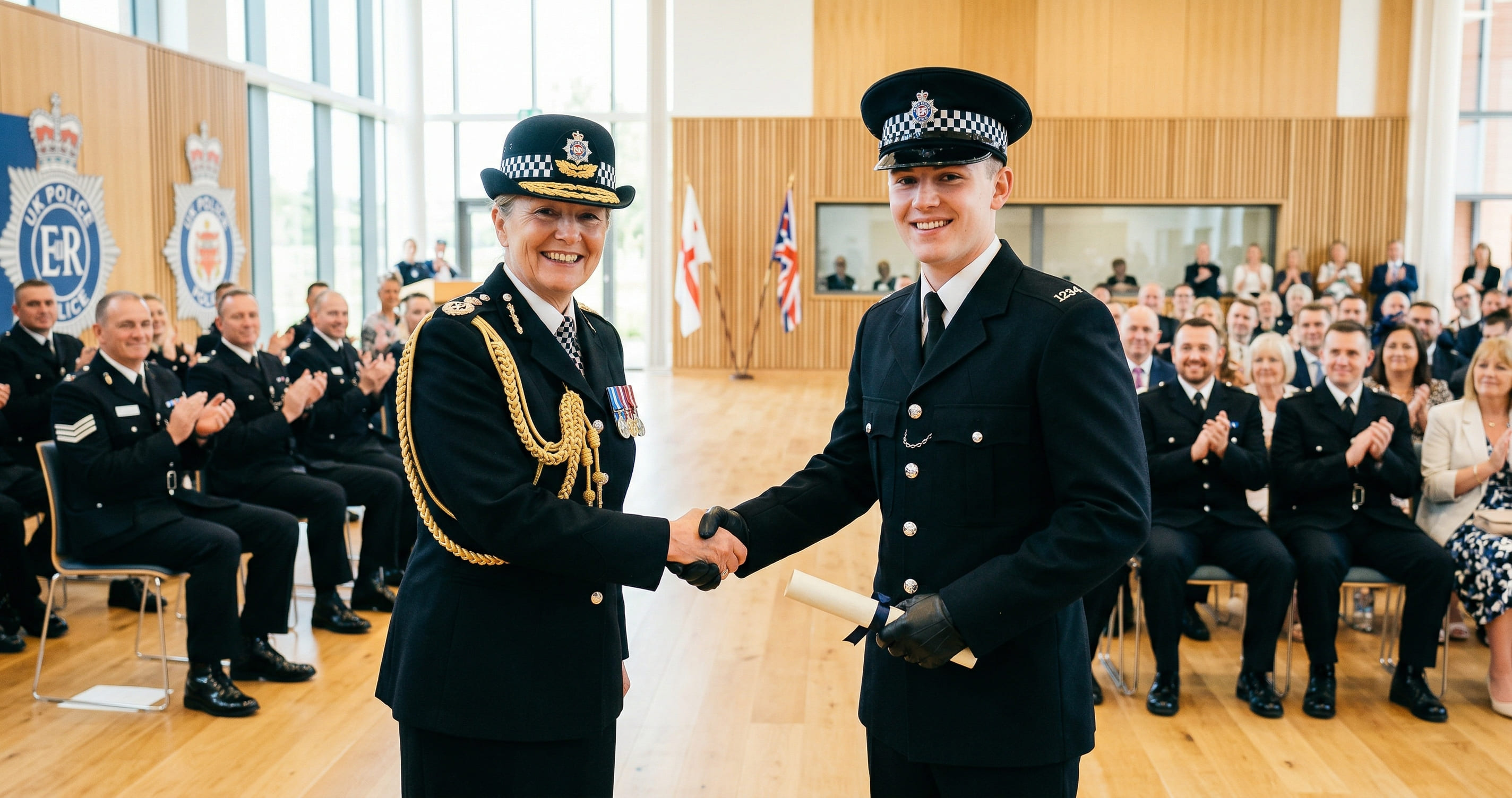
There is a quiet crisisbuilding inside UK policing that no amount of additional recruitment can solveon its own. Over the past five years, forces have hired tens of thousands ofnew officers. The workforce is, on paper, larger than it has been for over adecade. Yet the experience curve has inverted. A third of officers in Englandand Wales now have fewer than five years of service. Frontline supervisors are,in some forces, mentoring colleagues who joined only weeks after completingtheir own probation. And at the very moment policing needs strong, sustainedleadership at every level, a government commission has confirmed what manyinside the service already knew: investment in leadership development has beenchronically under-prioritised, consistently outspent by investment inregulation and oversight.
This is the backdrop againstwhich the Police Leadership Commission, chaired by Lord Blunkett and reportingto the Home Secretary in May 2026, is conducting its review. Its terms ofreference are unambiguous: identify the gaps in leadership capability acrossall ranks, determine what a future-ready leadership pipeline looks like, andchart a new path forward. For heads of L&D and HR directors inside policeforces, the commission's work is not a distant policy exercise. It is a directsignal that the way forces develop their people is about to change, and thatthose who are already building the foundations will be better positioned whenit does.
The experience gap is a leadership gap
The uplift programme recruitedmore than 20,000 officers between 2019 and 2023. That influx was necessary andwelcome. But fast-tracking numbers into the service without a correspondinginvestment in the development infrastructure to support those officers hascreated a structural problem that goes beyond headcount. At the end of March2025, 32% of officers in England and Wales had fewer than five years ofservice. Before the uplift, that figure sat at around 25%. The differencematters enormously when it comes to leadership continuity and the quality ofday-to-day supervision.
The Institute for Governmenthas noted that some of those mentoring the newest recruits are officers barelyout of their own two-year probationary period. That is not a criticism ofindividuals; it is a systems failure. When leadership development is notstructured, tracked, and connected to progression pathways, capability does notaccumulate in the way an organisation needs it to. It dissipates. It walks outthe door with every voluntary resignation, 16% of which in 2023/24 came fromofficers in their first year of service.
For those responsible forpeople development inside forces, this translates into a very practicalchallenge: how do you build a leadership pipeline when so much of yourworkforce is simultaneously new, stretched, and still finding its professionalfooting?
The commission’s findings and what they signal
The Police LeadershipCommission is the most significant review of police leadership in a generation.Its scope covers all ranks, from frontline sergeants to chief constables. TheCollege of Policing has been direct about what the review is responding to:more is currently spent on scrutiny and inspection in forces than on leadershipand development. That imbalance is both a cause and a consequence of thebroader challenges policing faces around culture, trust, and performance.
The commission’s framing isimportant. It is not simply asking what training courses officers shouldattend. It is asking what kind of leadership culture policing needs, whatskills and capabilities are required at each level of rank and responsibility, andhow development programmes should be linked to progression and promotion. Thisis a systemic reorientation, one that treats leadership capability as somethingthat must be built deliberately and evidenced continuously, not left to chance,to mentoring by osmosis, or to institutional tradition.
For HR and L&Dprofessionals in policing, the commission’s work creates both an urgentimperative and an opportunity. Forces that can already demonstrate a structuredapproach to leadership development, with clear pathways, measurable outcomes,and evidence of capability being built at every level, will be far betterplaced to respond when the commission’s recommendations land in the summer.Those that cannot will find themselves having to build that infrastructurereactively, under scrutiny, with the additional pressure of HMICFRS inspectionfindings increasingly focused on workforce development as a driver of forceperformance.
Why tracking completions is not the same as building leaders
One of the most common pitfallsin police learning and development is the conflation of activity with outcome.A force can track that 94% of its sergeants completed the leadership module. Itcan produce a spreadsheet showing who attended which programme. What it oftencannot do is demonstrate whether those officers are actually better leaders asa result, whether their teams perform more effectively, whether their directreports report higher levels of support and development, or whether leadershipcapability is being distributed across the force in a way that builds long-termresilience.
This distinction mattersbecause HMICFRS inspectors are increasingly looking beyond completion rates.Their inspections of workforce development examine whether development activityis connected to individual performance appraisal, whether it is linked toskills and capability data across the force, and whether there is an evidencetrail showing how learning investment translates into better policing outcomes.Forces that can answer those questions confidently, with data, are the onesreceiving the strongest inspection results in this area.
The challenge for most forcesis that their learning platform and their talent and performance systems areentirely separate. The officer who completes a leadership programme exists inthe LMS. The outcome of their performance review exists in a different system,managed by a different team. There is no golden thread connecting the two. As aresult, no one inside the force can answer the question that the commission,the inspectorate, and the Home Office are increasingly asking: is thisinvestment in leadership development actually working?
Building the leadership pipeline: what good looks like
The forces that are gettingthis right share some consistent characteristics. They have moved beyondtreating leadership development as a series of discrete interventions andinstead built it as a continuous, tracked process. Development is linked to theskills and competencies required at each rank, not just to the programmesavailable. Officers can see their own development pathways, understand whatprogression looks like, and access learning that is relevant to where they arein their career. Their supervisors can see where development gaps exist acrosstheir teams before those gaps become performance problems.
The National Centre for PoliceLeadership, one of the outcomes proposed in the government’s ‘From Local toNational’ White Paper, is intended to create consistent national standards forthis kind of development at every level. But national standards alone will notdeliver leadership capability at force level. Forces will still need thesystems and the infrastructure to build against those standards, to gather theevidence, and to demonstrate progress over time.
For forces already working witha platform that integrates learning, talent, and performance, this transitionis significantly more achievable. When a leadership development programme islinked to a competency framework, and that framework is connected toperformance review data, the force can track not just who completed theprogramme but whether the expected skills are being demonstrated in practice.That is the kind of evidence that satisfies an HMICFRS inspector, a Police andCrime Commissioner, and increasingly, a Home Office that is explicitlyscrutinising forces on workforce development as part of its ‘Licence toPractise’ agenda.
Succession planning: the part most forces are still not doing
Leadership development andsuccession planning are closely related but rarely treated as a joined-upprocess inside police forces. Most forces can tell you how many officers arecurrently at inspector grade. Very few can tell you, with confidence, which ofthose officers have the skills, the development record, and the performancetrajectory to be ready for promotion to chief inspector within the next 18months. The data exists, in theory. But it is scattered across appraisalrecords, training logs, line manager notes, and force HR systems that do nottalk to each other.
This is a workforce planningrisk that forces cannot afford to ignore. The combination of a younger, lessexperienced officer base and the forthcoming leadership reform agenda meansthat the demand for competent, development-ready officers at every supervisorylevel is about to increase, not decrease. Forces that can identify their talentpipeline proactively, rather than reactively filling vacancies after theyarise, will have a significant operational and cultural advantage.
Thinqi works with police forcesthat are building exactly this kind of capability. By connecting developmentactivity to skills data and performance outcomes, forces using the Thinqilearning system can generate real-time visibility of where leadership capabilitysits across the force, which officers are tracking towards readiness for thenext rank, and where the gaps are that need to be addressed before they becomeurgent. That is not a future aspiration; it is a practical outcome that forcesare achieving today, and that the reform agenda is going to require more of inthe months ahead.
The window for getting ahead of this is now
The Police LeadershipCommission reports in May 2026. HMICFRS will conduct its own independentinspection of police leadership through 2026. The government’s policing reformagenda is moving forward, with increased funding contingent on forcesdemonstrating improved capability and efficiency. For heads of L&D and HRdirectors, the question is not whether leadership development will become ahigher-priority, higher-scrutiny part of force life. It is whether your forcewill be ready when it does.
The forces that will be in thestrongest position are those that have already started: connecting theirlearning and development activity to talent and performance data, buildingevidence trails that demonstrate outcomes rather than just activity, and embeddingleadership development into their workforce planning rather than treating it asa separate function that HR and L&D manage in isolation.
If your force is stilloperating those functions in silos, you are not alone. But the gap betweenwhere policing is now and where the reform agenda expects it to be is narrowingfast. The time to close it is before the commission’s recommendations land, notafter.
Your next step starts here.
Get inspired by real success stories, see the platform in action, or explore the features that set us apart.

Explore expert insights, success stories, and practical frameworks for proving strategic value.

Book a personalised demo and discover how leading organisations are moving from spreadsheets to strategic influence.

Discover how we unify learning, talent, and performance to prove business outcomes automatically.